
Many substance abuse treatment centers treat credentialing as a one-time administrative task. In reality, it’s an ongoing process that plays a significant role in whether a program gets paid or not. When credentialing gaps occur, billing revenue can be delayed for weeks or even months, placing unnecessary strain on cash flow and operations.
Credentialing, contracting, and billing are deeply interconnected. Credentialing verifies provider qualifications, contracting establishes the legal and financial terms with payers, and billing submits claims for reimbursement. When credentialing is incomplete or incorrect, contracts may not be valid and billing cannot move forward. For treatment centers to receive timely payment, this process must function like a well-oiled machine.
Many new and growing treatment centers underestimate how closely credentialing, contracting, and billing are connected. Understanding the most common credentialing gaps can help your program come out on top by protecting revenue and avoiding preventable delays. Let’s look closer at the credentialing gaps that delay substance abuse billing revenue.
Delayed Provider Credentialing with Payers
One of the most common credentialing issues occurs when providers are not fully credentialed with insurance payers before services begin. New treatment centers may hire clinicians and assume credentialing will “catch up,” only to find that claims cannot be paid until the provider is officially approved.
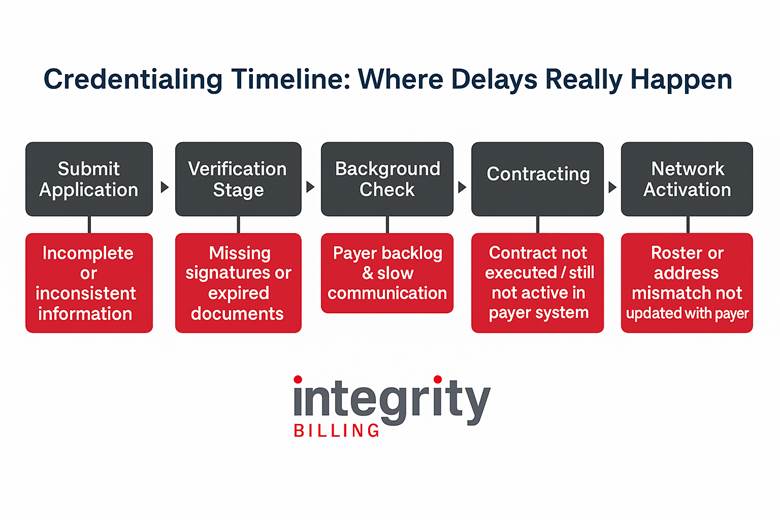
Credentialing timelines vary by payer and can take anywhere from 60 to 180 days or more. During this time period, claims submitted under an uncredentialed provider may be denied or held indefinitely. Even when retroactive credentialing is allowed, reimbursement is never guaranteed.
Incomplete or Inaccurate Credentialing Applications
Credentialing applications require detailed, precise information, and even small errors can slow the process. Oversights like missing documentation, incorrect license numbers, outdated addresses, or inconsistencies between applications and CAQH profiles can all trigger delays.
New treatment centers often juggle applications across multiple payers, increasing the chance of errors. And while requests for corrections can be made, each back-and-forth conversation adds time, pushing back the date when claims can be processed and paid.
Gaps in Facility Credentialing and Contracting
While provider credentialing gets much of the attention, facility credentialing and contracting are equally important. Some centers assume that once individual providers are credentialed, billing can proceed without issue. However, many payers require the facility itself to be credentialed, contracted, and enrolled separately.
If facility credentialing is incomplete or contracts are not finalized, claims may be denied. Unfortunately, these gaps often go unnoticed until revenue fails to come through.
Failure to Track Credentialing Expirations
Credentialing is not a “set it and forget it” process. Licenses, certifications, and payer enrollments all have expiration dates that must be monitored closely. However, new treatment centers often lack systems to track these deadlines, leading to lapses that disrupt substance abuse billing.
When credentials expire, payers may suspend or deny claims until renewals are completed. In some cases, previously paid claims can even be recouped if services were rendered during a lapse.
Misalignment Between Credentialing and Billing Setup
Another common issue arises when credentialing information does not align with billing system setup. If provider names, NPIs, taxonomy codes, or service locations are entered incorrectly or inconsistently, claims may be rejected despite valid credentialing.
These errors are especially common when treatment centers grow quickly or add new locations. This is why strong coordination between credentialing and billing teams is essential. Without this close relationship, revenue delays become far more likely. When you partner with Integrity Billing, you benefit from credentialing and billing services working together under one roof.
Credentialing Delays When Expanding Services or Locations
As treatment centers grow, they often expand levels of care, add specialized services, or open new locations. While exciting, each of these changes may require updated credentialing or new contracts with payers. In the midst of rapid growth, centers frequently overlook this step, assuming existing approvals will automatically carry over.
Unfortunately, billing for services without the appropriate credentialing in place can lead to denied claims and lost revenue. Taking a proactive approach to credentialing ensures expansion efforts are supported by timely reimbursement.
How Credentialing Gaps Impact Revenue Cycle Performance
Credentialing gaps don’t just delay individual claims—they disrupt the entire revenue cycle. When billing is stalled, cash flow becomes unpredictable, administrative workload increases, and staff must spend time reworking denied claims instead of focusing on operations and patient care. Over time, these inefficiencies compound, making it harder for new treatment centers to achieve financial stability.
How Integrity Billing Supports Credentialing and Revenue Flow
At Integrity Billing, we understand how credentialing directly impacts substance abuse billing revenue. Our team works closely with treatment centers to identify credentialing gaps, manage provider and facility enrollments, and ensure billing systems align with payer requirements.
By taking a proactive approach to credentialing and billing coordination, we help treatment centers reduce delays, improve cash flow, and focus on delivering high-quality care. To learn more about the comprehensive credentialing and contracting services at Integrity Billing, call us today at 888-368-7461 or fill out our contact form.