

In substance use treatment, providing quality care is always the top priority. But for facilities to stay open, staffed, and sustainable, that care also has to be supported by accurate, compliant billing. One of the most important pieces of that puzzle is utilization review, but it’s also one of the most misunderstood.
When done well, utilization review (UR) doesn’t just satisfy payer requirements. It also plays a critical role in improving outcomes, reducing denials, and strengthening the overall success of substance use billing.
At Integrity Billing, we see firsthand how strong UR processes can make the difference between steady cash flow and constant rework. We want to help treatment facilities work smarter, not harder, which is why we provide education on UR.
Here’s why utilization review matters and how it supports both clinical care and financial health.
What Is Utilization Review in Substance Use Treatment?
Utilization review is the process of evaluating whether a client’s level of care and length of stay are medically necessary and aligned with payer criteria. It involves reviewing clinical documentation, communicating with insurance companies, and advocating for continued authorization when services are justified.
In substance use treatment, UR typically includes:
- Initial authorization for admission
- Ongoing concurrent reviews
- Submitting clinical updates to payers
- Requesting extensions when needed
- Documenting medical necessity at each stage
In short, UR connects what’s happening clinically to what payers need to see in order to approve and reimburse services.
Why Utilization Review Is Critical to Substance Use Billing
People often assume that substance use billing depends on using the correct codes, but it also depends on whether services are authorized and supported by medical necessity. That’s where UR comes in.
Without strong utilization review, it’s possible for claims to be denied, services to be deemed not medically necessary, or lengths of stay to be retroactively reduced. In many cases, it’s not until months later that facilities face takebacks.
Excellent documentation is crucial, but even this won’t protect claims if the level of care isn’t properly reviewed and approved along the way. Fortunately, strong UR helps ensure that the services you provide are what payers have agreed to cover.
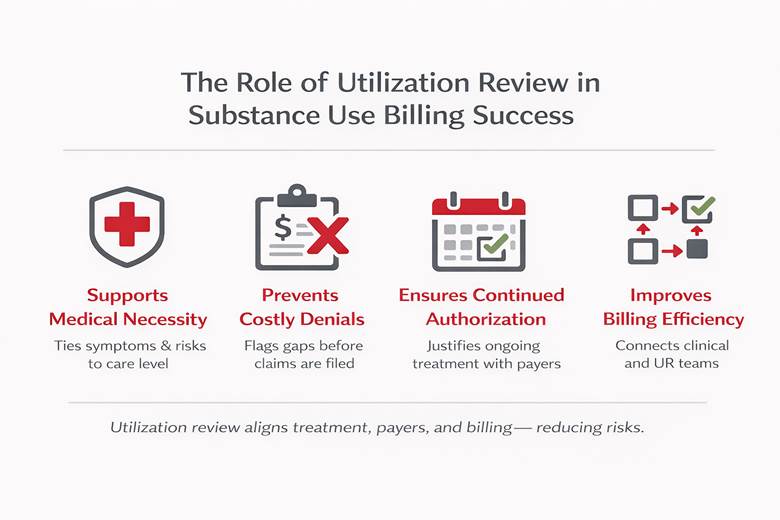
How UR Supports Medical Necessity
Medical necessity is one of the top reasons for denials in substance use billing. UR teams play a key role in keeping that necessity clear and up to date.
Effective UR processes tie symptoms and risk factors to the correct level of care, show progress (or lack thereof) over time, and justify continued stay when discharge would be unsafe. They also align treatment with ASAM or payer-specific criteria.
When UR and clinical teams work together, the record tells a consistent story: why the client needs this level of care today, not just why they needed it at admission. It’s this consistency that payers are looking for during reviews and audits.
Reducing Denials Before They Happen
One of the biggest benefits of utilization review is that it’s proactive. Rather than waiting for claims to be denied after services are delivered, UR helps facilities catch authorization gaps early, clarify documentation before submission, and address payer concerns in real time.
This front-end work often prevents back-end billing problems, saving time, reducing appeals, and improving cash flow. In other words, UR is one of your first lines of defense in protecting substance use billing success.
Where Facilities Often Struggle
Even well-run programs can struggle with UR because it sits at the intersection of clinical care and revenue cycle management.
The most common challenges we see are:
- UR staff disconnected from billing teams
- Inconsistent communication with clinicians
- Missed deadlines for concurrent reviews
- Documentation that doesn’t fully support continued stay
- Reliance on a single person without backup
When UR operates in a silo, small issues can snowball into larger billing problems later. That’s why we recommend treating UR as a shared responsibility. Strong programs keep UR, clinical, and billing teams aligned for the best results. When everyone understands how UR impacts substance use billing, the process becomes smoother and more effective.
How Integrity Billing Helps Strengthen UR and Billing Together
At Integrity Billing, we don’t just look at claims—we look at the full picture. That includes how utilization review, documentation, and billing processes work together (or don’t).
If your facility is seeing things like frequent medical necessity denials, takebacks after payment, or confusion between UR and billing teams, it may be time to dig deeper. That’s why Integrity Billing offers a free forensic billing assessment. Through this assessment, our team reviews your billing data and workflows to identify documentation gaps, process breakdowns, and UR-related denial trends.
Bringing It All Together
Utilization review is a strategic tool that protects care, supports compliance, and drives success in substance use billing. When UR is well-integrated with your billing process, your facility should see fewer denials, cleaner claims, and stronger medical necessity support. All of this translates into more predictable cash flow.
Contact Integrity Billing at 888-368-7461 to learn more about how we can help make utilization review a strength and not a stress point in your revenue cycle.