

Authorizations are a crucial yet fragile part of the substance use billing process. When they work, reimbursement flows smoothly. When they break down, even high-quality, medically necessary care can go unpaid.
Many substance use providers don’t realize how much authorizations affect reimbursement until denials start stacking up or payments slow to a crawl. By then, the issue often isn’t a single missed step but rather a systemic breakdown that quietly disrupts the entire revenue cycle.
Let’s explore in greater detail how authorization breakdowns can have a negative impact on reimbursement.
Authorizations Are More Than a Checkbox
Authorizations are not just administrative hurdles. They are payer agreements that define what services are covered, at what level of care, and for how long. If services fall outside those parameters (even unintentionally), payers may delay, reduce, or deny payment entirely.
Common authorization-related issues include:
- Services provided outside approved dates
- Level of care mismatches
- Missed or late reauthorizations
- Incomplete or insufficient clinical justification during utilization review
Each of these issues can trigger reimbursement delays or denials, even when treatment itself is appropriate.
How Small Gaps Turn into Big Payment Problems
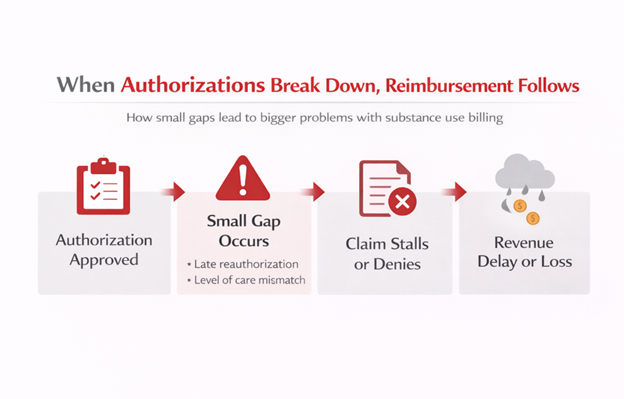
Authorization breakdowns often start small. A reauthorization request is submitted late. Documentation doesn’t fully support continued stay. A payer updates its criteria, but workflows don’t adjust.
Initially, these issues may only affect a few claims. Over time, however, they compound. Claims sit in review longer, payments arrive inconsistently, and denials increase. Providers may assume the problem lies with the payer, when in reality the root cause is misalignment between authorizations, documentation, and substance use billing.
Because these breakdowns happen upstream, their impact isn’t always immediately obvious until revenue starts to suffer.
Documentation and Authorization Must Work Together
One of the most common reasons authorizations fail is weak alignment between clinical documentation and payer expectations. Treatment plans and progress notes must clearly demonstrate medical necessity, ongoing risk, and continued benefit of care.
When documentation is vague, repetitive, or not updated regularly, payers may question continued authorization. Even if care is clinically justified, insufficient documentation can stall or deny reimbursement.
Authorization breakdowns are rarely just billing problems. They also tend to be workflow and communication problems between clinical and billing teams.
The Ripple Effect on the Revenue Cycle
When authorizations break down, the impact extends far beyond individual claims. Providers may experience:
- Increased accounts receivable aging
- Higher denial rates and appeal volumes
- Unpredictable cash flow
- Staff burnout from constant rework
At a certain point, billing teams are no longer preventing problems—they’re reacting to them. This reactive cycle makes it harder to identify where issues began and how to fix them.
Identify Hidden Authorization Gaps
If authorization issues are affecting reimbursement, or if you’re unsure where breakdowns may be occurring, Integrity Billing offers a free forensic assessment. This evaluation helps providers pinpoint authorization gaps, documentation misalignment, and workflow breakdowns that delay payment.
This proactive review provides clarity on where issues are happening and how to address them before they escalate into widespread denials or revenue loss.
Why Authorization Oversight Requires Specialization
Authorization management in substance use treatment is uniquely complex. Payer criteria vary widely, timelines are strict, and expectations change frequently. What works for one payer or level of care may not work for another.
Substance use billing companies like Integrity Billing bring specialized oversight by tracking authorization windows and deadlines, aligning documentation with payer-specific criteria, and ensuring billing matches approved services. Our team also monitors trends to catch issues early on, before they disrupt the revenue cycle.
Moving from Reactive to Proactive
Authorization breakdowns don’t resolve themselves, and they rarely improve without intentional changes. Providers who take a proactive approach to authorization management protect both revenue and continuity of care.
By strengthening workflows, improving communication between clinical and billing teams, and regularly reviewing authorization performance, providers can reduce delays and stabilize reimbursement.
Integrity Billing partners with substance use providers to turn authorization management into a proactive, reliable process. Contact us today at 888-368-7461 or fill out our contact form to learn more.