

Claim denials are one of the most frustrating parts of day-to-day operations for behavioral health treatment centers. The scenario is all too familiar: a clinician provides excellent care, documentation is completed, the claim is submitted—and then it comes back denied. When this happens, it can feel like the system is working against you.
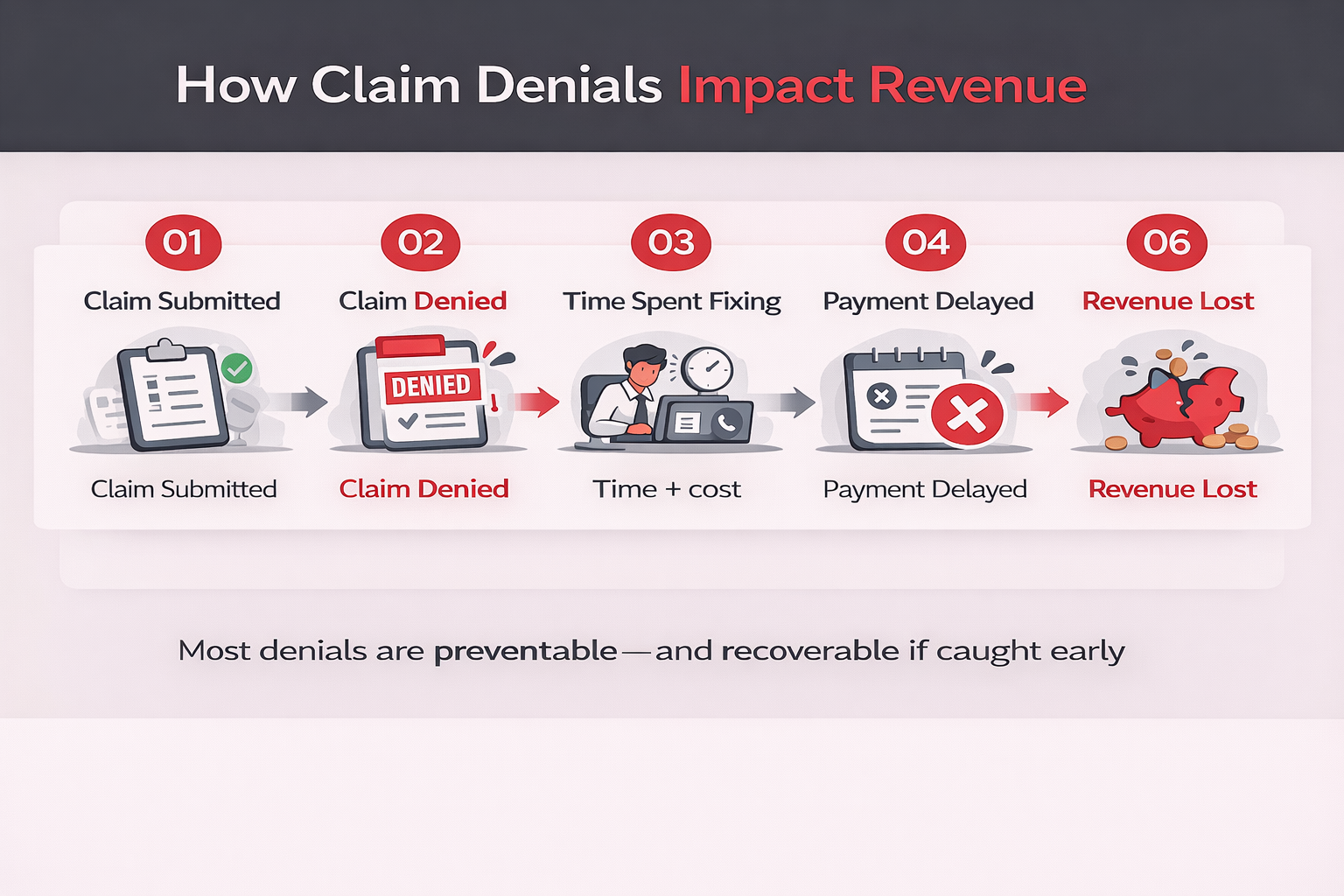
What many organizations don’t realize is that claim denials are more than just frustrating. They’re also one of the biggest threats to financial stability. Without a structured denial management process in place, denied claims can pile up quickly, quietly draining revenue and creating operational headaches for billing teams.
Let’s take a closer look at how claim denials affect your revenue, why behavioral health treatment centers are especially vulnerable, and what a proactive denial management strategy actually looks like.
The Real Cost of a Denied Claim
On the surface, a denied claim can look like a temporary setback. If you can fix and resubmit it, it shouldn’t cause too much of a problem, right? Not exactly. The true cost goes well beyond the face value of any single claim.
Consider everything that happens when a claim is denied: a staff member must identify it, research the reason for the denial, gather additional documentation, correct any errors, and resubmit the claim. All of this takes place while managing a full workload. The administrative cost of working a single denial is estimated to range from $25 to $118 per claim, depending on complexity. Multiply that by dozens or even hundreds of denials each month, and the overhead adds up quickly.
Then there are the claims that never get worked at all. Studies consistently show that a significant percentage of denied claims are never appealed, meaning the revenue is simply written off. In behavioral health billing, where margins are already tight and payer reimbursements often lag behind the true cost of care, that write-off rate can be quietly devastating.
Why Behavioral Health Treatment Centers Face Higher Denial Rates
Behavioral health billing is complex, creating more opportunities for denials at every stage of the revenue cycle.
A few factors that make behavioral health treatment centers especially susceptible:
- Medical necessity documentation is scrutinized more heavily in behavioral health than in many other specialties. Payers routinely deny claims when they don’t see clear, specific evidence that the level of care was clinically justified, even when it clearly was.
- Utilization review requirements are strict and unforgiving. Many payers require concurrent reviews for ongoing treatment authorizations. Missing just one utilization review window—even by a day—can result in a denial for the entire authorization period.
- Coding and billing errors are more common in behavioral health because the code sets are nuanced, payer-specific rules vary widely, and small mistakes in modifier usage or service level coding can trigger an automatic denial.
- Credentialing lapses remain a persistent issue. Services rendered by providers whose credentialing with a given payer is expired, incomplete, or pending will be denied. This often happens retroactively, which creates significant rework.
- Authorization gaps are another major driver. Prior authorization requirements in behavioral health vary by payer, plan, and level of care. A claim submitted without a valid authorization is a denial waiting to happen.
Each of these issues is manageable on its own. But when they compound across a busy treatment center, the denial volume can reach a level that strains staff, delays cash flow, and ultimately affects your ability to invest in the programs and people that make your clinic successful.
The Cash Flow Ripple Effect
One of the most underappreciated impacts of high denial rates is the effect they have on cash flow timing. Behavioral health treatment centers often operate with narrow margins, and consistent, predictable reimbursement is essential for meeting payroll, covering overhead, and planning for growth.
When claims are denied and must be reworked, the payment timeline can stretch by 30, 60, or even 90 days. For a treatment center billing hundreds of thousands of dollars each month, that delay isn’t abstract. It represents a gap between the care you’ve already delivered and the revenue that’s meant to support the next cycle of operations.
In extreme cases, chronically high denial rates have forced treatment centers to reduce services, freeze hiring, or close programs entirely. This doesn’t happen because the clinical demand isn’t there, but because the revenue cycle cannot keep pace with the cost of delivering care.
What a Strong Denial Management Strategy Looks Like
The good news is that most claim denials are preventable and most denied claims are recoverable. The key is having the right processes in place on both ends.
On the prevention side, the most effective strategies include:
- Thorough eligibility verification before every appointment
- Real-time authorization tracking with proactive renewal reminders
- Regular audits of documentation to ensure medical necessity is clearly supported
- Ongoing coder training on behavioral health-specific billing and coding requirements
- Credentialing oversight to prevent lapses in payer enrollment
On the recovery side, every denial should be reviewed, categorized, and worked within the payer’s appeal window. Denials that share a common root cause (e.g., documentation gaps, credentialing issues, coding patterns) should be addressed systemically, not just one claim at a time.
Tracking your denial rate by payer, denial reason, and provider over time is one of the most valuable things you can do. The patterns in your denial data tell you exactly where your revenue cycle has weak points and where to focus your energy.
You Can’t Fix What You Can’t See. Schedule a Forensic Assessment Today.
Most behavioral health treatment centers we work with are surprised when they see the full picture of their denial activity. Claims they assumed were being worked. Revenue quietly aging out. Patterns that reveal systemic issues no one had connected yet.
That’s exactly what a forensic billing assessment is designed to uncover. At Integrity Billing, we analyze your claims data, denial trends, and revenue cycle processes to give you a clear, honest picture of where your money may be slipping through the cracks.
If you suspect denials are costing your organization more than they should, now is the time to find out. Contact Integrity Billing today to schedule your free forensic billing assessment. There’s no cost, no obligation—just a clear look at what your revenue cycle may be missing.