
When a substance abuse treatment program is new and incurring a number of expenses, handling billing in-house can seem like the most logical choice. It offers a sense of control, keeps processes close to home, and reduces upfront costs. However, as programs grow and payer requirements become more complex, in-house billing can turn into a major headache.
Knowing when to outsource substance abuse billing can help your treatment center protect revenue, reduce risk, and refocus your energy on patient care. Here are common signs that it’s time to rethink in-house billing.
Billing Is Pulling Focus from Clinical Care
Substance abuse billing is highly specialized. Between medical necessity documentation, authorization tracking, coding rules, and payer-specific requirements, billing quickly becomes a full-time responsibility. Unfortunately, patient care can quietly slip when administrative staff are spending hours chasing claims, responding to denials, or deciphering payer policies.
If billing responsibilities are pulling staff away from clinical oversight, it may be time to reconsider whether in-house billing is truly serving your center’s mission.
Growing Payer Complexity
The behavioral health billing landscape is constantly changing. Payers update policies, introduce new documentation requirements, and tighten compliance standards regularly. If you’re managing billing on your own, it’s your responsibility to keep up with these changes. The problem is, this requires ongoing education, training, and system updates.
Because in-house billing teams are often wearing many hats, they struggle to stay current. Even small knowledge gaps can result in denied claims, delayed payments, or increased audit risk. As payer complexity grows, so does the cost of billing errors, which can delay or restrict payment to your center.
Denials Become the Norm
Occasional claim denials are expected, especially in a frequently changing landscape. But when denials become frequent, it’s a red flag. Repeated denials related to documentation, authorization, or coding often indicate systemic issues rather than one-time mistakes.
In-house teams may lack the time or expertise to identify denial patterns, appeal claims effectively, or implement corrective workflows. Over time, this leads to unpredictable cash flow and mounting accounts receivable, making it difficult to plan, hire, or expand your services.
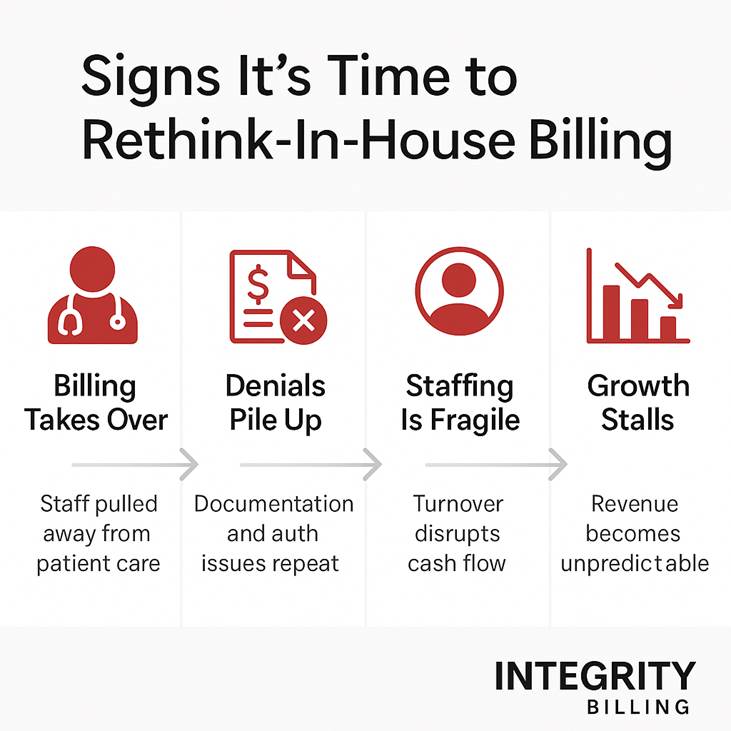
Staffing Is Fragile
Billing staff turnover can be particularly disruptive for substance abuse programs. It takes time to train new billing personnel, and internal expertise is often lost when experienced staff leave. During transitions, claims may go unsubmitted, follow-ups may lapse, and deadlines may be missed.
If billing operations rely on one or two key individuals, it may be a sign that the system isn’t sustainable in the long term.
Compliance and Audit Risk Increase
Substance abuse treatment is a highly regulated space, and audits are becoming more common. In-house billing teams may not have the bandwidth to conduct regular internal audits, monitor compliance updates, or prepare documentation consistently.
When audits do occur, preparation makes all the difference. Unfortunately, many in-house billing teams find themselves scrambling to gather records or correct past errors because proactive compliance monitoring wasn’t built into their workflow. This reactive approach can lead to recoupments, fines, or reputational damage.
Technology and Reporting Limitations
Effective billing requires more than submitting claims—it requires insight. Many in-house billing setups rely on outdated systems or limited reporting tools, making it difficult to track performance metrics like denial rates, days in AR, or payer-specific trends.
Without clear visibility into revenue cycle performance, leadership may not realize there’s a problem until financial strain becomes unavoidable.
When Outsourcing Becomes a Strategic Advantage
Some treatment centers worry about losing control if they outsource their billing needs. However, when you partner with Integrity Billing, you don’t lose control—you gain valuable expertise. Our behavioral health billing company brings payer knowledge, compliance awareness, and dedicated resources to the table. While in-house teams are often highly committed, replicating this level of expertise typically requires significant investment and ongoing training that many programs simply don’t have the capacity to maintain.
For growing substance abuse programs, outsourcing billing can stabilize cash flow, reduce administrative burden, and allow internal teams to focus on delivering high-quality care rather than managing revenue challenges.
How Integrity Billing Supports Sustainable Growth
At Integrity Billing, we work exclusively with behavioral health and substance abuse treatment programs. We understand the nuances of authorization management, documentation standards, and payer requirements. Our team stays ahead of changes so our clients don’t have to.
By partnering with our substance abuse billing company, your treatment center will gain a billing team that scales with them, reduces risk, and supports long-term financial stability. When in-house billing starts to limit growth instead of supporting it, it may be time for a smarter approach. Give us a call today at 888-368-7461 or fill out our contact form to learn more about our billing services.